

Blog
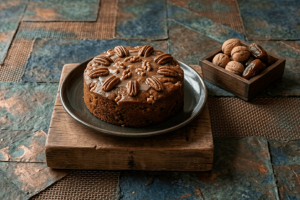
10 Eggless Baking Tips Every Beginner Should Know

10 Eggless Baking Tips Every Beginner Should Know
Eggless baking has become increasingly popular among home bakers, especially in India where many families prefer vegetarian recipes. While baking without eggs may seem challenging at first, the truth is that delicious cakes, cookies, muffins, brownies and breads can be made successfully without using a single egg.
For beginners, however, eggless baking often comes with a few common problems such as dense cakes, dry textures, sunken centers or cookies that spread too much. The good news is that these mistakes are easy to avoid once you understand a few basic principles.
Whether you’re just starting your baking journey or looking to improve your skills, these ten eggless baking tips will help you achieve better results and bake with confidence.
Many health-conscious bakers are now experimenting with alternative flours such as millet flour to create more nutritious baked products. If you’re interested in healthy baking using millets, explore our Millet Journey classes.
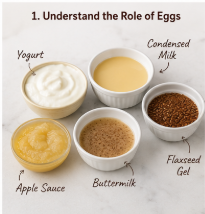
1. Understand the Role of Eggs
Before replacing eggs, it is important to understand why they are used in baking.
Eggs provide:
- Structure
- Moisture
- Binding
- Leavening
- Richness
When baking without eggs, you need alternative ingredients that perform these functions.
Common egg substitutes include:
- Yogurt
- Condensed milk
- Buttermilk
- Flaxseed gel
- Applesauce
- Mashed banana
Choosing the right substitute depends on the recipe.
2. Measure Ingredients Accurately
Baking is a science.
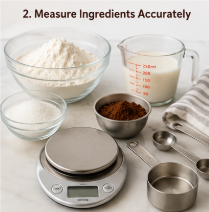
Unlike cooking, where ingredients can be adjusted freely, baking requires precise measurements.
Always:
- Use measuring cups and spoons
- Level dry ingredients properly
- Avoid estimating quantities
Too much flour can make baked goods dry, while excess liquid can make them dense and sticky.
Accurate measurements are one of the biggest secrets to successful eggless baking.
3. Use Fresh Baking Powder and Baking Soda
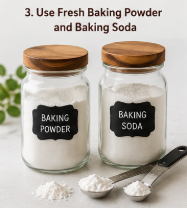
Many baking failures occur simply because leavening agents have lost their effectiveness.
Always check:
- Expiry dates
- Storage conditions
- Freshness
A simple test is to add baking powder to hot water or baking soda to vinegar.
If vigorous bubbling occurs, the product is still active.
Fresh leavening agents help cakes rise properly and create light, fluffy textures.
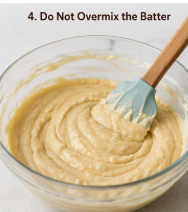
4. Do Not Overmix the Batter
One of the most common beginner mistakes is excessive mixing.
Overmixing:
- Develops gluten
- Makes cakes dense
- Creates tough muffins
- Produces chewy cookies
Mix only until the ingredients are combined.
A few small lumps are perfectly acceptable.
The less you handle the batter, the softer your baked products will be.
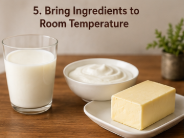
5. Bring Ingredients to Room Temperature
Cold ingredients do not blend properly.
For best results:
- Yogurt should be at room temperature
- Milk should not be refrigerator cold
- Butter should be softened if required
Room-temperature ingredients create smoother batters and ensure even baking.
This simple step can dramatically improve texture and consistency.
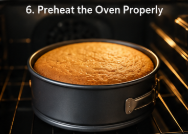
6. Preheat the Oven Properly
Many beginners place their batter into an oven that has not fully preheated.
This often results in:
- Uneven baking
- Flat cakes
- Poor rise
Always preheat your oven for at least 10–15 minutes before baking.
Use an oven thermometer whenever possible to ensure accurate temperatures.
Remember that even a small temperature difference can affect the final outcome.
7. Avoid Opening the Oven Door Frequently
It can be tempting to check your cake every few minutes.
However, opening the oven door releases heat and causes temperature fluctuations.
This can lead to:
- Sunken cakes
- Uneven rise
- Longer baking times
Wait until at least 75% of the baking time has passed before opening the oven.
Patience is one of the most valuable baking skills.

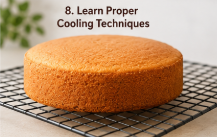
8. Learn Proper Cooling Techniques
Many beginners rush to remove cakes from pans immediately after baking.
Instead:
- Allow cakes to rest for 10–15 minutes
- Transfer them to a cooling rack
- Let them cool completely before frosting
Proper cooling prevents breakage and helps maintain structure.
Warm cakes are delicate and can easily crumble.
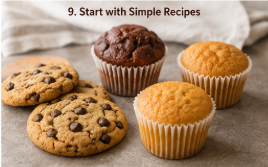
9. Start with Simple Recipes
Not every recipe is suitable for beginners.
Begin with:
- Basic vanilla cakes
- Chocolate cakes
- Muffins
- Cookies
- Brownies
Cookies are one of the easiest baked treats for beginners and an excellent way to understand dough consistency, baking temperatures and texture control. If you’d like to master bakery-style cookies, explore our Cookies & Biscuits Workshop.
These recipes help you understand mixing methods, baking times and ingredient behavior.
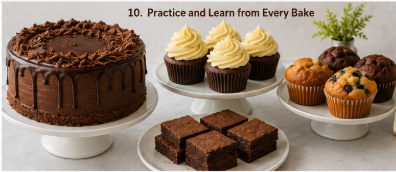
Once you gain confidence, you can move on to advanced cakes, pastries and decorative baking such as drip cakes, celebration cakes and professional cake decoration techniques taught in our International Cakes (Baking & Icing) workshop.
10. Practice and Learn from Every Bake
Even experienced bakers occasionally make mistakes.
The key is to learn from every baking experience.
Ask yourself:
- Was the cake too dense?
- Did the cookies spread too much?
- Was the oven temperature correct?
Keeping notes helps you improve rapidly.
With consistent practice, you will soon understand how ingredients interact and how to troubleshoot problems effectively.
Why Learn Eggless Baking from Professionals?
While online recipes are helpful, beginners often struggle with:
- Ingredient substitutions
- Texture problems
- Baking science
- Oven management
- Decoration techniques
Learning from experienced instructors helps eliminate trial and error. Our Healthy Baking & Cooking Courses teach beginners the science behind successful eggless baking, healthier ingredient substitutions and practical baking techniques.
At Khushboo Cooking Classes, we teach practical eggless baking techniques that can be easily replicated at home.
Students learn:
- Cakes
- Cookies
- Brownies
- Muffins
- Tea-time treats
- Professional baking tips
Whether you are baking for your family, starting a home business or simply exploring a new hobby, structured learning can significantly accelerate your progress.
Frequently Asked Questions
Can I bake cakes without eggs?
Yes. Ingredients like yogurt, condensed milk, buttermilk and fruit purees can successfully replace eggs in many recipes.
What is the best egg substitute for cakes?
Yogurt and condensed milk are among the most reliable options for soft and moist cakes.
Why is my eggless cake dense?
Common reasons include overmixing, inaccurate measurements, expired baking powder or insufficient liquid.
Are eggless cakes as good as regular cakes?
Absolutely. When prepared correctly, eggless cakes can be just as soft, moist and delicious as traditional cakes.
Where can I learn eggless baking?
Khushboo Cooking Classes offers hands-on eggless baking workshops in Gurgaon covering cakes, cookies, breads, healthy baking and advanced decorating techniques for beginners and experienced home bakers.
Conclusion
Eggless baking is not difficult once you understand the basic techniques and principles behind it. By measuring accurately, using fresh ingredients, avoiding overmixing and practicing regularly, beginners can achieve professional-quality results at home.
Every successful baker starts with simple recipes and learns through experience. With patience, practice and proper guidance, anyone can master the art of eggless baking and create delicious treats that family and friends will love.
Learn at Khushboo Cooking Classes where we provide online classes all around the globe and offline classes in Gurgaon.
Contact us for more information.
9999107475 OR [email protected]